

Biochar Production Technology and Carbon Credit Potential
By converting waste biomass into biochar, industries can reduce emissions, improve sustainability, and create measurable environmental value.
Applications
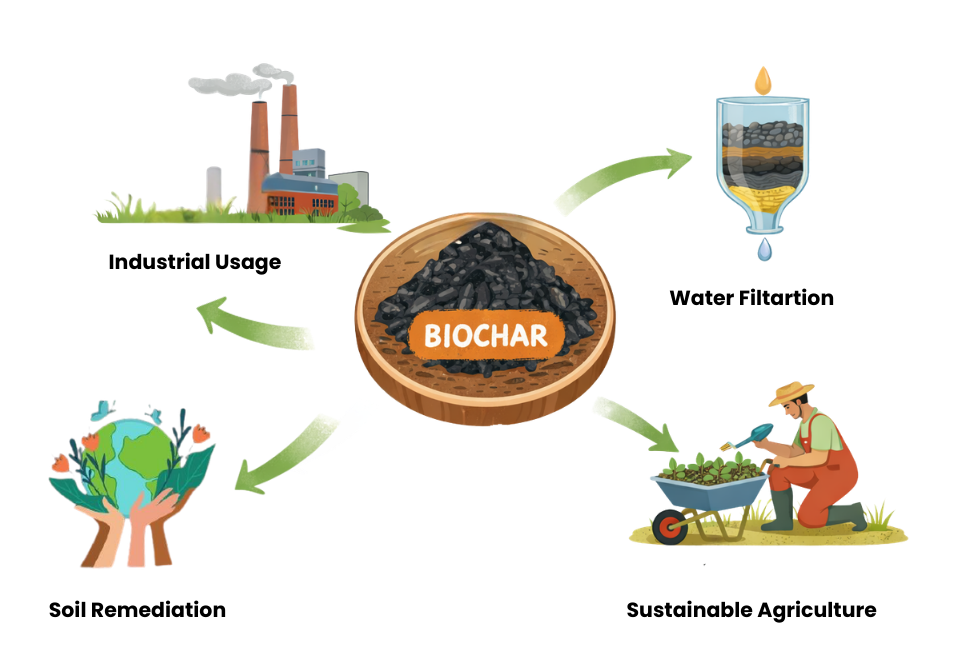
Biochar is used across multiple sectors.
- Carbon Sequestration and Carbon Credits
Biochar permanently locks atmospheric carbon into a stable solid form, making it a reliable long term carbon removal solution. - Soil Enhancement and Agriculture
It improves soil fertility, enhances water retention, and reduces fertilizer requirements, leading to better crop productivity and soil health. - Activated Carbon and Filtration
Biochar can be used in water purification and effluent treatment due to its porous structure and adsorption properties. - Industrial Fuel
It can replace coal and petcoke in cement, steel, and brick industries, supporting carbon neutrality goals.
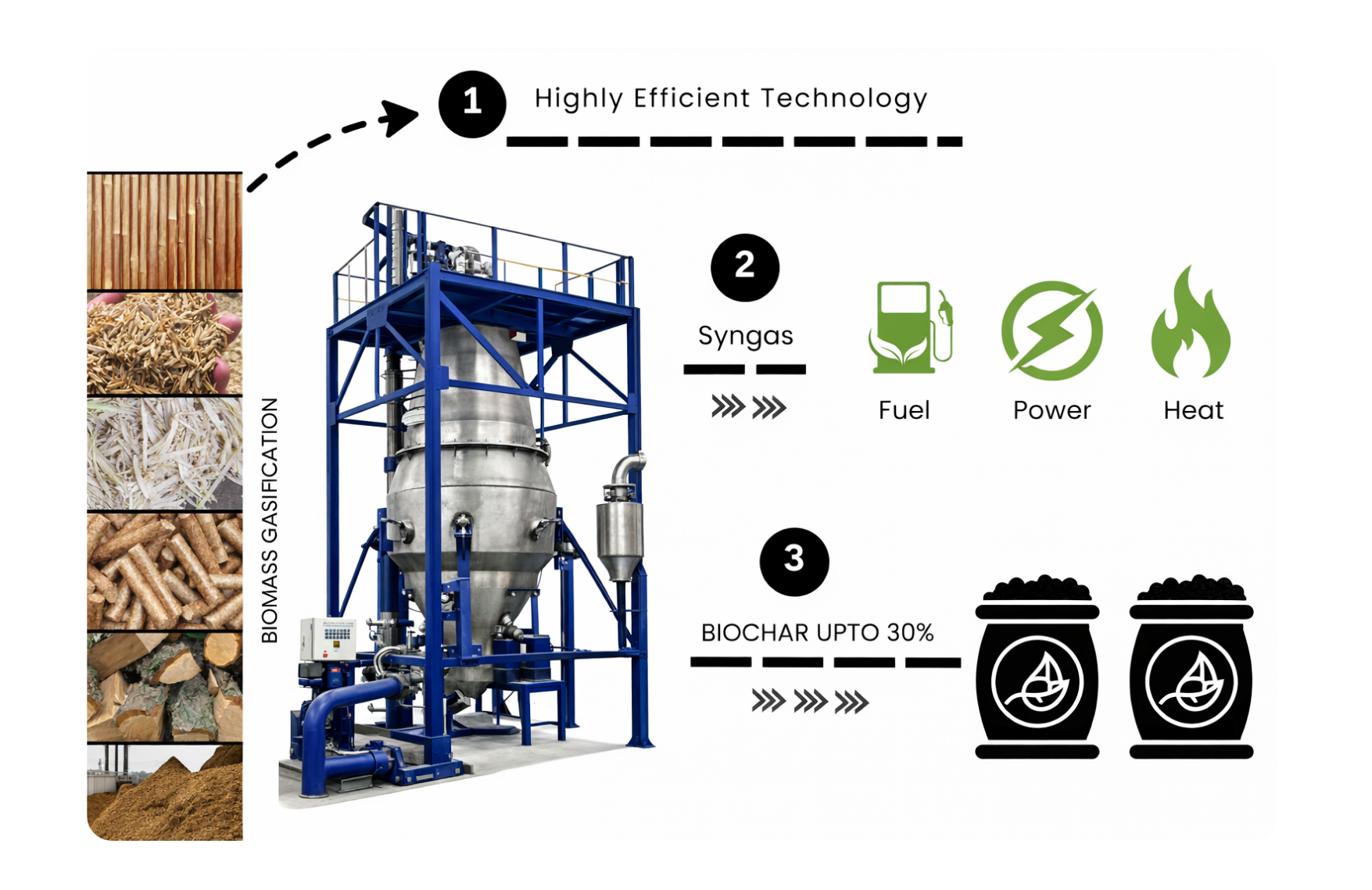
Biochar systems support a wide range of biomass feedstocks, including paddy straw, rice husk, bagasse, bamboo, sawdust pellets, cotton stalk, wood chips, agro-residues, forestry waste, and industrial biomass.
CPG Gasification Technology
Partial oxidation of biomass at controlled temperature, primarily for energy generation, with the production of biochar for recovery. Biochar yield ranges from 5 to 30% depending on operating mode, with capacities up to 30 TPD.
Technology Portfolio
Multiple proven technologies are available for biochar production.
- Pyrolysis Reactor Technology
Biomass is heated in the absence of oxygen to maximize carbon retention. Suitable for small-scale projects up to 10 TPD of feedstock, with a typical biochar yield of 25 to 30%. By-products include bio-oil and syngas for thermal or power applications. - Rotary Reactor
Designed for high-capacity industrial production up to 200 TPD. Biochar yield ranges between 25 and 30% with bio oil and syngas as valuable byproducts.
Biochar is globally recognized as a permanent carbon removal pathway in voluntary carbon markets. One ton of biochar can remove approximately 2 to 2.5 tons of CO2, generating equivalent carbon credits.
With growing net-zero commitments and the implementation of Carbon Border Adjustment Mechanism regulations, industries must reduce embedded emissions. Biochar supports a lower carbon footprint, compliance, and long-term carbon value creation.
Let us convert biomass into carbon value.